For Africa Expansion

Enter New Markets.
No Local Entity Required.

Africa is 54 countries, 42 currencies, hundreds of regulatory frameworks, and 1.4 billion consumers. Expanding across borders traditionally requires local company registration, tax IDs, banking relationships, logistics partnerships, and compliance teams in every market. Porsa eliminates all of that. As your Merchant of Record, we provide the infrastructure to sell into any African market from day one — payments, compliance, logistics, and storefronts included.

Think of it as having a local presence in every African country — without actually being there.

54 African Countries
40+ Currencies
Zero Local Entities
Full Compliance
The Barriers

Why Most Businesses Never
Expand Beyond Their Home Market

Only 6% of trade in Africa is intra-African — the lowest of any continent. Not because the demand isn't there, but because the infrastructure to sell across borders is prohibitively complex. Here are the four walls that keep businesses trapped in single markets.

Local Entity Requirements

To legally sell in most African countries, you need a registered local entity — a subsidiary, a branch office, or at minimum a registered agent. Each registration requires local directors, local banking relationships, regulatory filings, and ongoing compliance obligations. Setting up a single entity can take 3–12 months and cost tens of thousands of dollars. Doing this across even 5 African markets is a multi-year, multi-hundred-thousand-dollar proposition that only large enterprises can afford.

For small and mid-sized businesses, this means their addressable market is limited to their incorporation country — no matter how strong the demand is in neighbouring markets. The regulatory barrier alone eliminates 93% of potential intra-African commerce.


Map showing the complexity of establishing entities across African countries
Payment method fragmentation across African markets

Payment Method Fragmentation

Africa's payment landscape is the most fragmented in the world. M-Pesa dominates in East Africa but doesn't exist in West Africa. Orange Money is strong in Francophone countries but unavailable in Anglophone ones. MTN MoMo covers parts of West and Central Africa. Wave is growing rapidly in Senegal and Côte d'Ivoire. Card penetration varies from 3% to 65% depending on the market.

To accept payments across Africa, you'd need to integrate with dozens of payment providers — each with its own API, KYC requirements, settlement timeline, currency, and fee structure. Research shows that 42% of African businesses cite payment gateways as a major constraint. For expanding businesses, this fragmentation turns a growth strategy into an integration nightmare.

Tax & Regulatory Complexity

Every African country has its own VAT rate (from 0% to 18%), its own tax filing requirements, its own customs procedures, its own consumer protection laws, and its own data privacy regulations. Some countries have digital services taxes. Some have withholding taxes on cross-border payments. Some require specific product certifications. The compliance landscape changes frequently and unpredictably.

Even with the AfCFTA agreement reducing tariffs, the non-tariff barriers — documentation, standards, and procedures — remain significant. A business selling from Nigeria to Kenya still needs to navigate customs on both ends, calculate the correct duties, ensure product compliance, and file the appropriate returns. Without dedicated compliance teams, most businesses simply don't try.


Varying VAT rates and regulations across African countries
Cross-border logistics routes across Africa

Cross-Border Logistics

Shipping a product from Abidjan to Accra (400 km) can take longer and cost more than shipping from Shanghai to Lagos (12,000 km). Intra-African logistics suffer from poor road networks, congested border crossings, limited air freight capacity, and underdeveloped warehousing infrastructure. The African Development Bank estimates that logistics costs in Africa are 2–3 times higher than in developed countries.

For businesses looking to expand, the logistics gap means higher costs, longer delivery times, higher damage rates, and more customer complaints. Building your own logistics network across multiple African countries requires capital investment, local partnerships, and operational expertise that most growing businesses don't have.
The Opportunity

The AfCFTA Is Creating
the World's Largest Single Market

The African Continental Free Trade Area connects 1.3 billion people with a combined GDP of $3.4 trillion. It's the largest free trade area by number of member states since the creation of the WTO. For businesses prepared with the right infrastructure, this is a once-in-a-generation expansion opportunity.

1.4B

Population across 54 African nations

$3.4T

Combined GDP of AfCFTA member states

$450B

Projected increase in intra-African trade by 2035

70%

Of Africa's population is under 30

Africa's Demographic Dividend

Africa is the youngest continent on earth. By 2050, one in four people globally will be African. This demographic dividend — young, increasingly urban, digitally connected, and commercially active — represents the largest consumer growth opportunity of the 21st century.

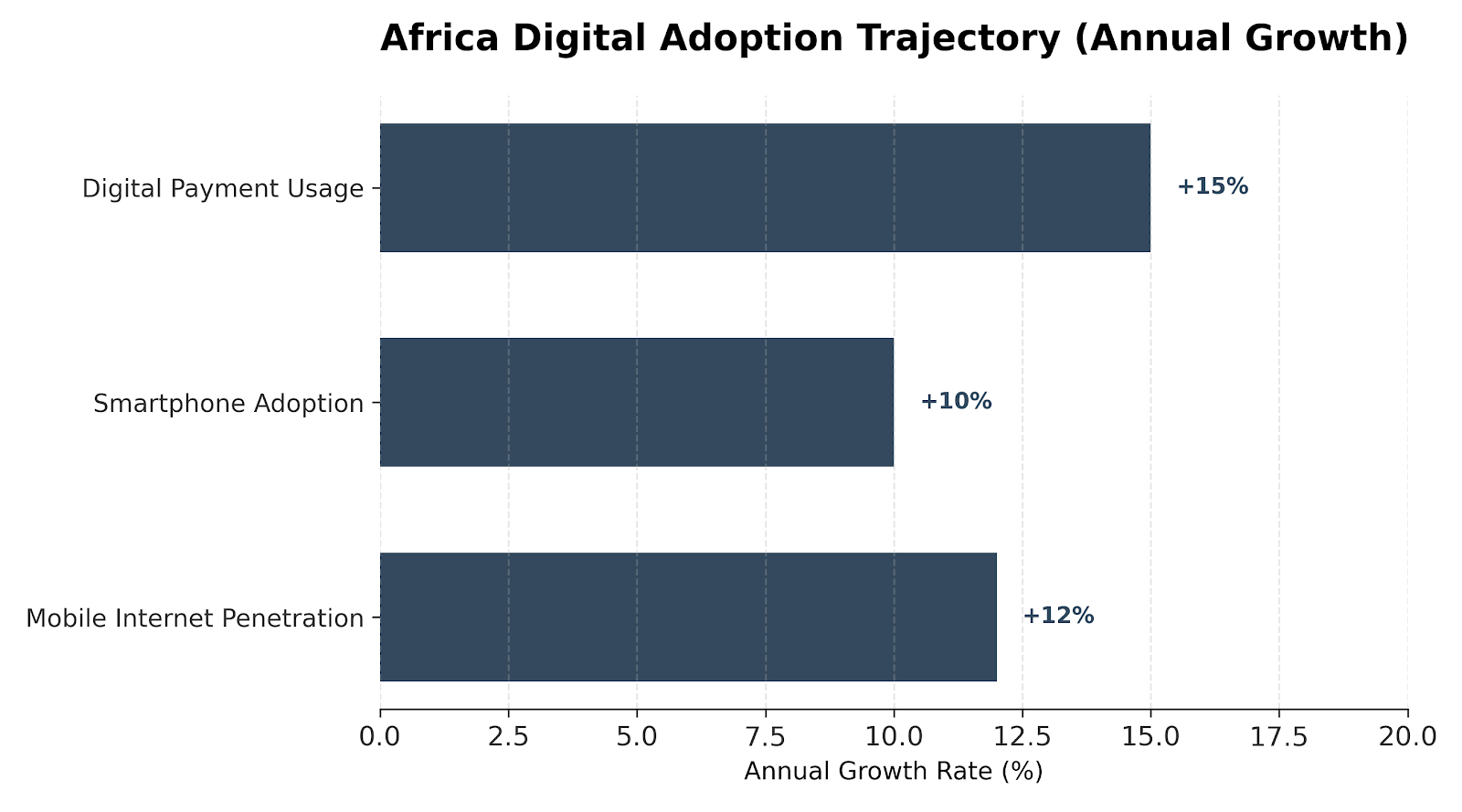
Mobile internet penetration is growing at 12% annually. Smartphone adoption is accelerating. Digital payment usage is expanding at unprecedented rates. The African consumer of 2030 will be mobile-first, price-conscious, demanding of quality, and increasingly accustomed to cross-border purchasing.

The businesses that establish pan-African presence now — with the infrastructure to serve these markets as they mature — will capture disproportionate value as the continent's consumer economy scales from $2.1 trillion today to a projected $6.7 trillion by 2030.

Africa's demographic dividend and growing consumer economy
Porsa Expansion Stack

Your Pan-African
Infrastructure — Ready Now

Porsa acts as your Merchant of Record across Africa. We handle the legal, financial, and operational complexity of cross-border commerce so you can focus on what you do best: building products and growing your brand.

No Local Entities Needed

Porsa is the legal seller in every transaction. As Merchant of Record, we handle tax registration, filing, and compliance in each market. You sell across Africa through your Porsa storefront without establishing local subsidiaries, branch offices, or registered agents. Zero legal setup. Zero registration delays.

Pan-African Payments

One integration gives you M-Pesa, Orange Money, MTN MoMo, Wave, Airtel Money, local and international cards, bank transfers, and USSD across 40+ African currencies. Your checkout automatically displays the right payment methods for each customer's country. Multi-currency pricing. Transparent FX. Settlement in your preferred currency.

Compliance Handled

Tax calculation, collection, and remittance across all African jurisdictions. VAT, digital services tax, withholding tax, customs duties, consumer protection, data privacy — all handled by Porsa's compliance infrastructure. We stay current with regulatory changes so you don't have to. Sell compliantly in every market from day one.

Cross-Border Logistics

Integrated logistics network for both physical and digital fulfillment across African markets. Warehousing partnerships, shipping rate calculations, carrier integration, customs documentation, tracking, and delivery confirmation. Ship products to customers across the continent without building your own logistics operation.

Localised Storefronts

Your storefront automatically adapts for each market. Local currency pricing, localised checkout flows, appropriate payment methods, and market-specific shipping options. Customers in Nairobi see prices in KES with M-Pesa checkout. Customers in Dakar see XOF with Wave and Orange Money. Same store, locally relevant everywhere.

Market Intelligence

See which markets are generating the most revenue, which products perform best in which countries, and where your next expansion should focus. Revenue by country, conversion by payment method, delivery performance by region. Data-driven expansion decisions based on real market signals.

Who This Is For

Every Business That Wants
to Reach Africa

Whether you're an African business expanding beyond your home market, or a global brand entering the continent for the first time — Porsa provides the infrastructure.

🌍

African Businesses Going Pan-African

You've built a successful business in Nigeria, Kenya, South Africa, or another major market. Your products are proven. Demand signals are coming from neighbouring countries. But the cost and complexity of establishing entities, banking relationships, and logistics in each new market is holding you back. Porsa gives you immediate access to every African market without the multi-year entity setup process.

  • Expand from one African market to 54 — overnight
  • Accept local payment methods in every country
  • Ship cross-border with integrated logistics
  • Stay compliant without local legal teams
🚀

Global Brands Entering Africa

You see the numbers — 1.4 billion consumers, 70% under 30, the fastest-growing mobile internet market. But entering Africa has always meant choosing a single market, spending months on setup, and hoping you picked the right one. Porsa lets you launch across the entire continent simultaneously, test demand in real-time, and double down on the markets that convert best — all without establishing a single local entity.

  • Test all 54 markets simultaneously
  • Localised checkout for each country
  • Full regulatory compliance from day one
  • Data-driven market selection based on real demand
💻

Digital Product Companies

SaaS companies, digital content providers, online education platforms, and software vendors. You don't need logistics — but you absolutely need local payment methods, multi-currency pricing, digital services tax compliance, and licence management across African markets. Porsa provides the commercial infrastructure for digital-first expansion.

  • Accept M-Pesa, Orange Money, MTN MoMo, and cards
  • Digital delivery with licence management
  • Digital services tax compliance per country
  • Multi-currency pricing and billing
🏭

Manufacturers & Distributors

You produce goods that African consumers want — but your distribution has been limited to one or two markets because cross-border shipping, customs, and compliance are too complex. Porsa's integrated logistics and Merchant of Record model gives you a direct-to-consumer channel across the continent, supplementing your existing distribution networks.

  • D2C storefront with pan-African reach
  • Customs documentation and duties handled
  • Cross-border shipping and tracking
  • Unified order management across markets
How It Works

Go Pan-African
in Three Steps

No entity registration. No banking setup. No compliance teams. Just three steps to reach every African market.

1

Set Up Your Products

Create your Porsa account and add your products — digital, physical, or both. Set pricing in your home currency and Porsa automatically generates pricing for every other African currency using real-time exchange rates. Upload your brand assets and customise your storefront.

2

Select Your Markets

Choose which African markets to sell in — or launch everywhere at once. Porsa activates local payment methods, shipping options, and compliance for each selected market instantly. Your storefront automatically localises for each customer's country.

3

Start Selling

You're live across Africa. Customers discover your products, check out with their preferred local payment method, and receive their purchases via instant digital delivery or physical shipping. Porsa handles taxes, compliance, and logistics. You handle growth.

Africa Has 1.4 Billion Consumers.
How Many Can Reach Your Store?

Porsa gives you instant access to every African market — payments, compliance, logistics, and storefronts included. No local entities. No multi-year setup. No compromise. The infrastructure to go pan-African is ready. Are you?

Free to start. No credit card required. Sell across Africa from day one.